Langrisser
- 3.9
- Rating
- 1.00M
- Installs
- Free
- Price

 Analysis by App-foxy
Langrisser is the kind of strategy game I open when I want a battle that rewards planning rather than quick tapping. Developed by ZlongGames, it combines a fantasy campaign with turn-based tactical encounters, character development, and a large crossover identity built around Tekkaman Blade. I found its appeal in the way each move creates a small consequence: a unit takes position, an attack succeeds or fails, a reward arrives, and I immediately start thinking about how to improve the next attempt.
The game is free to start and aimed at a Teen audience. It has passed one million installs, which makes it easy to see why it remains visible among mobile strategy games. Its average score is 3.9 from roughly thirty-two thousand ratings, a useful sign that the experience attracts a substantial audience but is not universally smooth. That matches my impression: Langrisser has a strong tactical core, yet it asks for patience and can feel demanding when progression, menus, and battles begin competing for attention.
The first action is choosing how to approach the battlefield
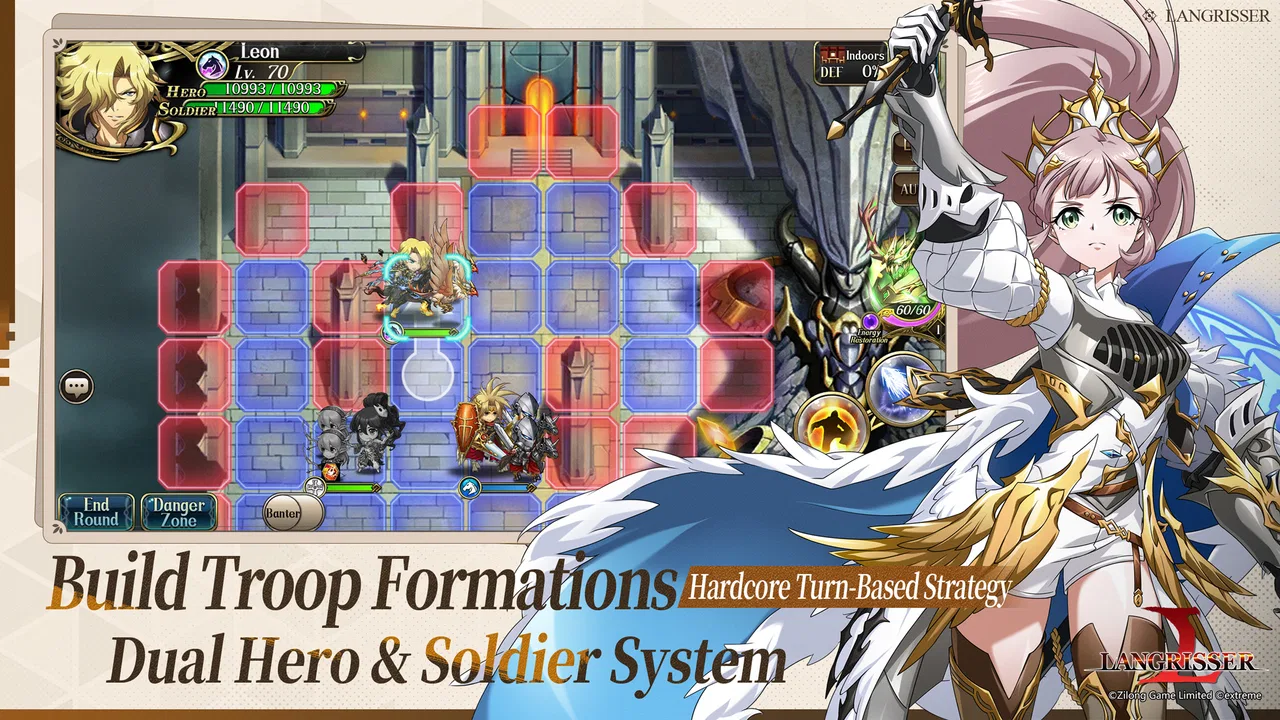
My first meaningful decision in a Langrisser battle is rarely “which enemy should I hit?” It is usually “where should this unit stand before the fight begins?” Movement, terrain, attack range, unit roles, and the order of actions all matter. A powerful character placed too far forward can become an easy target, while a weaker unit positioned behind the right ally may survive long enough to change the entire encounter.
You May Also Like

 Blood Strike: 2.5 Anniversary
Blood Strike’s Loadouts Turn Every Drop Into a Tactical Gamble
A close look at Blood Strike’s custom loadouts: how fast access to signature weapons reshapes its battle royale rhythm, rewards preparation, and narrows the gap between fights.

 Pandora - Music & Podcasts
Pandora’s Music Is Easy to Start, but Harder to Recover
Pandora’s strength is its low-effort path from a seed to a station. Its weak spot is how much confidence it asks you to place in connection, setup, and quiet recovery.

 8 Ball Pool
 Is Built on Rivalries, Rematches, and Routine
A close look at the rivalries, rematches, shared routines, and unanswered safety questions that turn a quick pool match into a persistent mobile community.

 Samsung Music
’s Quiet Strength Is Playing What You Already Own
Its reach comes less from spectacle than from dependable access to a personal library. That simplicity is both the app’s strongest retention engine and its ceiling.

 AccuWeather: Weather Radar
AccuWeather Review: A Quick, Clear Forecast for Everyday Decisions
For everyday plans, the best forecast is the one you can understand quickly. AccuWeather makes rain timing, radar, and local conditions easy to act on, with a few trade-offs.

 Hill Climb Racing
Why Hill Climb Racing Still Turns Crashes Into One More Run
A tiny car, a bumpy hill and one more upgrade: Hill Climb Racing keeps resurfacing because its simple chaos makes every near-miss feel personal.
More From Our News Desk



That makes the opening turn more interesting than the usual mobile combat routine. I am not simply selecting an attack and watching a result. I am arranging a small formation, checking threats, and deciding whether to advance immediately or wait for the opponent to enter a better position. The game’s strategy category is deserved because the best outcome often comes from resisting the obvious move.
When I play casually, I tend to begin by identifying the most dangerous enemy rather than the closest one. That habit saves turns and reduces the chance of losing a key character early. It also gives the battle a clear purpose. Instead of moving every unit as far as possible, I can create a safer plan: protect a vulnerable ally, separate an enemy group, or prepare a coordinated attack for the following turn.
One of the more useful lessons is that damage alone does not define a good turn. A defensive move can be better if it forces the opponent into an awkward approach. Likewise, finishing a weak enemy may be less valuable than weakening a stronger one before it gets an opportunity to act. Langrisser becomes more satisfying once I stop judging turns by immediate numbers and start judging them by the position they create.
Why the feedback rhythm keeps each move readable
The feedback loop is straightforward: I move a character, commit to an attack or skill, see the result, and then adjust to the new board state. That clarity matters on a phone because a complicated strategy game can quickly become tiring if the outcome feels mysterious. Here, the battlefield usually tells me why a plan worked or failed. A unit was exposed, an enemy had the better matchup, or I spent an action too early.
That rhythm creates tension without requiring every encounter to be long. A successful turn gives me a visible advantage, but it also reveals the next problem. Defeating one opponent may open a path while exposing another flank. Protecting a healer or support character may keep the team alive, but it can slow the attack enough for reinforcements to arrive. The game continually turns a small success into a new decision.
I especially appreciate this when replaying a stage. The first attempt often serves as reconnaissance. I learn where pressure comes from, which enemy deserves priority, and whether my formation can handle the map. On the next run, I can make a cleaner opening rather than repeating the same sequence blindly. That is a more meaningful form of replay value than simply raising a number and trying again.
There is also a practical advantage to thinking in turns instead of rushing. If I am playing during a short break, I can pause between decisions and return to the battle without losing the thread. Langrisser is not completely effortless, but it suits players who enjoy making one careful choice at a time. People looking for a fast auto-battle game may find this pace too deliberate, especially when a stage demands several adjustments.
Rewards feel best when they solve a problem
The reward stage is where the game connects tactical performance with long-term progress. After a battle, I am not only pleased because I won; I am looking at what the result lets me improve. A stronger character, a better setup, or a more reliable team composition can make a previously uncomfortable encounter manageable.
That connection is important. In weaker strategy games, rewards feel detached from play, as if a battle is merely a short animation before the next menu. Langrisser works better when I use the outcome to answer a specific question. Did I lack damage? Was a defender unable to hold a lane? Did a character need more survivability? The next upgrade becomes more satisfying when it addresses an observed weakness rather than being chosen at random.
My advice is to avoid spreading every improvement evenly across the entire roster. A broad collection can be useful, but early resources have more impact when they support a dependable core team. I prefer strengthening characters that already cover complementary roles, then adding flexibility when a stage exposes a gap. This approach reduces the feeling of constantly maintaining too many underpowered options.
Another useful habit is to treat rewards as preparation, not permission to ignore strategy. A better-developed team can compensate for mistakes, but it does not remove the need to read the map. If I use progression as an excuse to attack carelessly, I eventually reach a stage where raw improvement is no longer enough. The game is at its best when character growth and tactical learning move together.
Langrisser also deserves a warning here because free-to-play progression can change the way rewards feel. The game includes in-app purchases ranging from $0.99 to $99.99 per item. I can enjoy the basic experience without treating spending as mandatory, but players who dislike any pressure around optional purchases should approach with a clear personal limit. I recommend deciding in advance whether purchases are part of your hobby budget, rather than making that decision after a frustrating loss.
The session reset is what makes another attempt tempting
Every battle eventually resets the situation. I either complete the objective, fail and rethink the plan, or leave with a clearer idea of what needs changing. That reset is the reason I often begin another session even after a difficult encounter. The previous attempt has produced information, and I want to test whether one adjustment is enough.
A realistic everyday use case is a short evening session after work or school. I can play one stage, notice that my front line collapses when it advances too quickly, and return later with a different opening. The second session has a purpose: keep the vulnerable unit behind cover, delay the strongest attacker, and focus on the enemy that controls the pace. Even when I do not win immediately, the game gives me something concrete to improve.
This structure also makes Langrisser more suitable for players who enjoy gradual mastery. I do not need to remember an entire long sequence to feel progress. I can focus on one lesson per attempt: conserve a skill, protect a particular character, or avoid triggering several enemies at once. The reset turns failure into a planning tool, provided I am willing to analyze what happened.
On the other hand, the reset can feel repetitive if I want constant novelty. Repeating a stage because my team is underdeveloped is less satisfying than replaying it to test a new tactic. That is an important distinction. If you prefer games where every minute introduces a fresh mechanic or location, Langrisser’s deliberate retry cycle may feel slower than expected.
The current version is 2.74.0, and the game has been available since January 22, 2019. Those details matter less than the practical question of whether I am comfortable joining an established game rather than a brand-new one. Langrisser has the feel of a long-running service with substantial material to work through, which is appealing for committed players but potentially overwhelming for someone who wants a compact campaign with a simple endpoint.
Where it stands beside other mobile strategy choices
Compared with quick base-building games, Langrisser puts more emphasis on individual battlefield decisions. I am not mainly waiting for construction timers or checking a resource queue. The important question is how units interact in a specific encounter. That makes it a better fit for someone who wants direct tactical control rather than a management game that progresses mostly between sessions.
Compared with simple turn-based RPGs, it asks more from positioning. A strong character cannot automatically rescue a poor formation, and victory is not always secured by selecting the most powerful ability. Players who enjoy grid-based planning, careful sequencing, and learning from failed attempts will probably find more depth here than in a combat system built around tapping the recommended action.
The Tekkaman Blade crossover gives the game a distinctive identity, but I would not choose it solely for the recognizable theme. The lasting appeal comes from the tactical loop and the long-term team decisions. If the crossover is your main reason for downloading, give the combat enough time to judge whether the strategy layer suits you; the presentation alone will not make every stage enjoyable.
There are also situations where I would recommend a different type of game. If you want a completely offline-feeling experience, a short premium campaign, or no attention to optional purchases, a self-contained strategy title may be a better match. Langrisser is more appropriate for someone who welcomes ongoing progression and is comfortable returning to the same systems over time.
Small habits that make the campaign less frustrating
My first tip is to inspect the entire encounter before committing to a forward rush. The nearest target is not always the correct target, and an apparently safe route can expose a support character. I spend a moment identifying enemy reach, likely attack priorities, and escape routes. That short pause often prevents a much longer recovery.
Second, I use failed attempts to create a single testable change. Changing the whole team, every skill, and the entire route at once makes it impossible to know what helped. If I keep the formation mostly stable and alter one major decision, the next result teaches me more. This is especially useful when a stage feels unfair at first.
Third, I save important abilities for moments that change the board rather than using them whenever they are available. A skill that removes a dangerous enemy, protects a vulnerable ally, or opens a route can be worth more than a slightly larger attack on a target I could defeat normally. The best use is often the one that prevents the next problem.
Finally, I treat team development as a response to actual battles. If a character repeatedly falls before contributing, I do not automatically replace the whole roster. I first ask whether the problem is placement, timing, or a missing role. Sometimes the right improvement is not more power but a safer sequence. That mindset reduces wasted resources and makes the strategy layer feel more personal.
Who should download it and who should skip it
I would recommend Langrisser to players who enjoy tactical fantasy games, turn-based positioning, and the satisfaction of solving a battle on a second or third attempt. It is also a good choice for someone who wants a substantial free game to revisit regularly, especially if character development and a long-running crossover setting sound appealing.
I would be more cautious about recommending it to anyone who dislikes menus, gradual progression, or repeating encounters. The game expects attention, and its free-to-play structure means optional purchases are part of the surrounding experience. A player who wants a clean, one-time purchase with no ongoing progression decisions may feel more comfortable elsewhere.
Device compatibility is fairly approachable: the listed minimum is Android 6.0, so it is not restricted to only recent Android hardware. Even so, I would keep expectations realistic on older phones. Strategy battles may be manageable, but the overall experience can still feel less comfortable on a small or slower device, particularly when moving between combat and progression screens.
My verdict on the action-to-reset loop
Langrisser succeeds because its central loop has a clear shape. I take an action, receive immediate tactical feedback, earn progress, reset my plan after the battle, and begin another session because I understand what I want to try next. That is a stronger reason to return than a vague promise of more content. The game gives failure a practical role: it shows me where my plan broke.
Its limitations are equally clear. The learning curve can be demanding, progression may feel less comfortable for players who want instant power, and optional purchases require sensible boundaries. Not every stage produces a satisfying puzzle, and repetition can become tiring when I am replaying only because my team needs more development.
Still, my overall impression is positive. ZlongGames has built a strategy game that rewards patience, not just collection or speed. The 3.9 average from about thirty-two thousand ratings reflects a mixed but sizeable response, and I can understand both sides. Langrisser is not the easiest mobile strategy recommendation, but for me it becomes compelling once I accept its pace and use every battle as information.
The best reason to try it is the next decision, not the last reward. If you like looking at a battlefield, making a careful move, learning from the result, and returning with a sharper plan, this free Teen-rated game is worth your time. If you want effortless combat or a finished adventure that asks nothing from you after each stage, I would choose a simpler alternative instead.
FAQs for Langrisser
01What kind of game is Langrisser?
Langrisser is a tactical role-playing game based on the classic Langrisser strategy series. It combines turn-based battles, character progression, equipment upgrades, story chapters, and collectible heroes. Each unit has different classes, skills, and strengths, so winning usually requires more than simply choosing the strongest characters. Positioning, terrain, movement range, faction bonuses, and team composition all have an important impact on the outcome of battles.
02Is Langrisser free to play?
Langrisser can be downloaded and played for free, but it includes optional in-app purchases. These purchases may provide premium currency, summoning opportunities, stamina, cosmetic items, or progression resources. It is possible to enjoy the main story without spending money, although collecting specific heroes and upgrading a large roster may take considerable time. Players who prefer steady progress should be prepared for daily activities and resource management.
03Does Langrisser require an internet connection?
An internet connection is generally required to play Langrisser because the game relies on online accounts, cloud-based progression, events, updates, and multiplayer features. You should expect to connect to the servers when launching the game and when accessing most content. This makes it less suitable for uninterrupted offline play. A stable Wi-Fi or mobile data connection is recommended, particularly during story missions, competitive modes, and large downloads.
04Is Langrisser suitable for beginners who have never played a strategy RPG?
Langrisser is accessible to newcomers, but it becomes more complex as you progress. Early missions introduce movement, combat, classes, skills, and formations through tutorials, while later stages demand careful planning and specialized teams. Beginners should pay attention to class advantages, faction buffs, enemy ranges, and objective conditions rather than relying only on automatic combat. The large roster and upgrade systems may feel overwhelming at first.
05Does Langrisser include multiplayer or competitive content?
Yes, Langrisser offers more than a single-player campaign. Depending on the current version and available events, players can encounter cooperative activities, guild features, challenges, and player-versus-player modes. Competitive content can be rewarding but may place newer players against highly developed teams, especially at higher ranks. You can still experience substantial story and progression content alone, but regular online players will find more long-term activities.
Pros
- Deep tactical combat rewards careful planning and clever positioning.
- Large roster of heroes with distinct classes and useful team combinations.
- Rich story campaigns include memorable characters and fully voiced scenes.
- Frequent events provide new challenges
- rewards
- and limited-time content.
- Excellent pixel-art presentation blends classic visuals with modern effects.
Cons
- Progress can feel slow without investing significant time each day.
- High-level content often favors optimized teams and rare upgraded heroes.
- Gacha mechanics may make collecting specific characters expensive or frustrating.
- Many menus
- systems
- and currencies can overwhelm new players at first.
- Some battles take a long time
- especially when playing through story stages.

Langrisser
Gallery